
Sylvia and the Non-Profits of Her Choice
As Captain Gaia, I had the privilege of traveling through time and space to the year 2000 in London to meet Sylvia, the late wife of our artist, Miguel, who passed away from ovarian cancer in 2001. Sylvia was a passionate advocate for animal welfare and just causes in the world, and supported several non-profit organizations that aligned with her values and beliefs. Her heart was deeply troubled by the abhorrent treatment of animals that were raised for food, and she made a conscious effort to stay away from fast-food chains because of the cruelty inflicted upon these animals.
Through Sylvia's dedication and compassion, she taught us the importance of making a positive impact on the world around us. As a result, we asked her to select the charities to be featured on our website, and she carefully chose organizations that aligned with the causes she held most dear. We are proud to carry on Sylvia's legacy by featuring those charities on our site, in honor of her unwavering spirit and commitment to making the world a better place.
Sylvia was an embodiment of hope, kindness, and empathy. She has left a lasting impression on me, and I am grateful for the opportunity to have met such a wonderful soul. May we carry Sylvia's memory in our hearts and continue to strive for a more just and compassionate world, inspired by her passion for animal welfare and commitment to making a positive impact.
Why Sylvia?
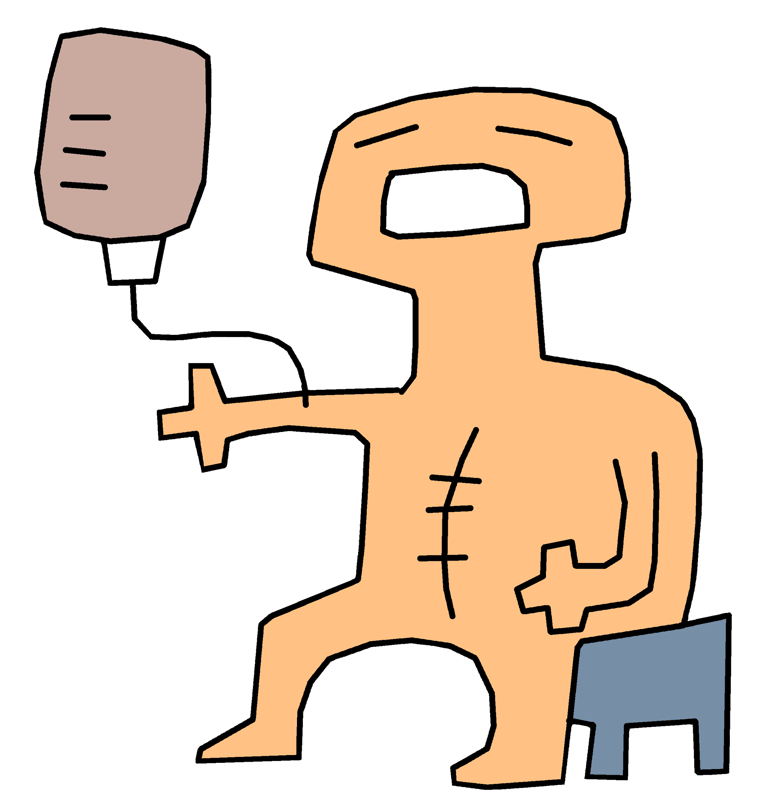
A Picture of Sylvia Receiving Chemotherapy
Name of Charity
Text


Death in Slow Motion
On an unremarkable morning, the world continued turning, and another day stretched out before us, filled with tasks to complete. "I have a lump," murmured Sylvia, her fingers grazing her abdomen. I moved closer and felt it myself. It was odd – it hadn't been there the day before. Overnight, an egg-sized lump seemed determined to emerge from her navel. "Do you feel pain?" I asked. "No," she replied, "but I don't feel well." In retrospect, she had begun to experience nausea and vomiting with increasing frequency a few days earlier. That was when we first realized something was amiss, though we couldn't fathom what it could be. She was a healthy 32-year-old woman who had never had health problems.
I promptly phoned our family doctor and requested an appointment at the earliest convenience. I believe they scheduled it two or three days later, but we couldn't wait that long – we had to visit the Emergency Room. Sylvia, however, insisted otherwise, preferring to go to the family doctor's office and speak to someone familiar. Upon our arrival, a nurse attended to us. Observing the lump and wearing a troubled expression, she informed us that the doctor, whose name escapes me, would see us later that morning. The situation seemed to be growing more serious, taking a turn for the worse. Yet, we remained in the dark, unable to imagine it being anything severe, assuming it was merely a temporary discomfort that would resolve itself with appropriate treatment. Finally, we found ourselves in the consultation room with our doctor – a fantastic professional who always greeted us with a smile and unwavering dedication. Her genuine concern for her patients was unmistakable.
She admitted that she couldn't identify the cause of the lump, remarking that it was unusual for someone so young. She urged us to go to the hospital to consult someone – though I can't recall who. We scheduled an urgent appointment and headed to St. Mary's in Paddington.
Upon examination, they surmised it was most likely a cyst. A cyst? Benign, malignant? They assured us it was benign, as Sylvia was far too young for any other possibility. A CT scan was promptly arranged, though my recollection of the timeline is hazy, with reality and fiction blurring together.
Various tests were conducted, and we were summoned back to see the hospital gynecologist. A diagnosis had been reached. As though in a film, we were instructed to sit. Tension mounted, and the somber expressions worn by the three of us spoke volumes: fear. Clear cell ovarian cancer, stage IVB. We were left speechless for a moment. After a pause, the doctor continued to explain the diagnosis and treatment plan. The tumor's advanced state left no alternative but to proceed with surgery, with chemotherapy to follow.
Following the initial surgery, Sylvia's condition visibly worsened. She had been hollowed out, and cachexia took hold, her gaunt and emaciated visage becoming increasingly evident with each passing day. Pain plagued her relentlessly. A morphine pump provided mere moments of relief. She could press the button, but another dose wouldn't arrive until what felt like an eternity to her, such was the torment she endured.
Days turned into weeks, and we were informed that chemotherapy needed to commence as soon as possible, given the cancer's advanced stage. The number of sessions she underwent escapes my memory, but I recall that they were torturous – before, during, and after. Sylvia's suffering was insufferable for me to witness; I could scarcely imagine her own experience. She lost her will to live. I did all that I could. I searched the internet, as laypeople do, seeking reasons, treatments , and solutions. Both during and after work, I scoured the web, eventually joining an ovarian cancer forum in the US. I encountered wonderful women, along with the occasional husband, father, brother, or partner. There were days of respite and others of upheaval, as news spread that a member of the group had succumbed to the beast, as it was referred to on the forum.
In time, I forged a friendship with a woman from Oregon, who I believe was named Suzye. She introduced me to a homeopathic doctor and friend of hers, Don, with whom she seemingly shared a love for horses. Don was a godsend during our time of despair, as we often referred to our situation on the forum. I sought his counsel on numerous occasions, and he offered assistance in any way he could. Some remedies appeared to alleviate Sylvia's pain, but her desire to persevere had waned so dramatically that it became a constant struggle for her to take any of Don's solutions. She even refused to drink the raw vegetable juices I prepared for her daily. She had simply given up.
Rather than delving into the minutiae, I will summarize the subsequent months as a harrowing ordeal devoid of any light at the end of the tunnel. There was a second surgery, additional rounds of chemotherapy, alternative treatments, and reactions to medications – particularly platinum-based drugs – that would make even the most stoic shudder.
Desperation and disbelief consumed us. Hospital admissions for gastric obstructions and other maladies became commonplace, with trips to and from the hospital occurring almost daily. Consultations with the oncologist involved interminable hours of waiting. Hope seemed a distant memory.
To abbreviate the tale, on a frigid October day in 2000, if memory serves, we were informed that there was nothing more to be done. The medications were exhausted. Surgery, chemotherapy, and radiation had proven ineffective, only extending Sylvia's suffering. Living on autopilot, she had detached herself from everything, resigned to her fate and longing for her end to come swiftly.
Unaware of my own selfishness and stubbornness, driven by fear and a sense of urgency, and failing to recognize the futility of further attempts, I resolved to try our luck in Madrid. I called my mother, seeking her help. She knew a renowned oncologist, whose name I shall not mention out of respect for his privacy, who offered to assist in any way necessary and invited us to his hospital in Madrid. We packed our bags, bringing only the essentials. Upon our arrival in Madrid, Sylvia was admitted to the aforementioned hospital, never to leave its confines again. A year of treatments, terror, and anguish lay in store for us. My own suffering pales in comparison to the living hell that constituted Sylvia's final months. Her heart continued to beat, evidenced only by the occasional stirring of her skeletal form in the bed she would never again leave alive. In the end, on a sunny and warm November 20th in 2001, the nurse told me there was nothing left. I was advised not to leave her side and warned that I wouldn't want to be absent. I approached Sylvia's bed, took her hand, and felt something extinguish forever. And a solitary tear traced a path down her left cheek.